





Description
Toyota tried to conquer the supermini car market with this three-seat vehicle, built for those looking for crowded cities and small parking spots, but it failed.
Little knew Toyota that the world financial crisis would hit the automotive industry so hard that some brands would cease to exist. Not even the big names were spared from that era, and customers switched their attention to more practical cars. While the iQ was an intelligent choice, at first sight, it wasn't fit for those times. Yet, the Japanese automaker kept this supermini vehicle on the market for seven years.
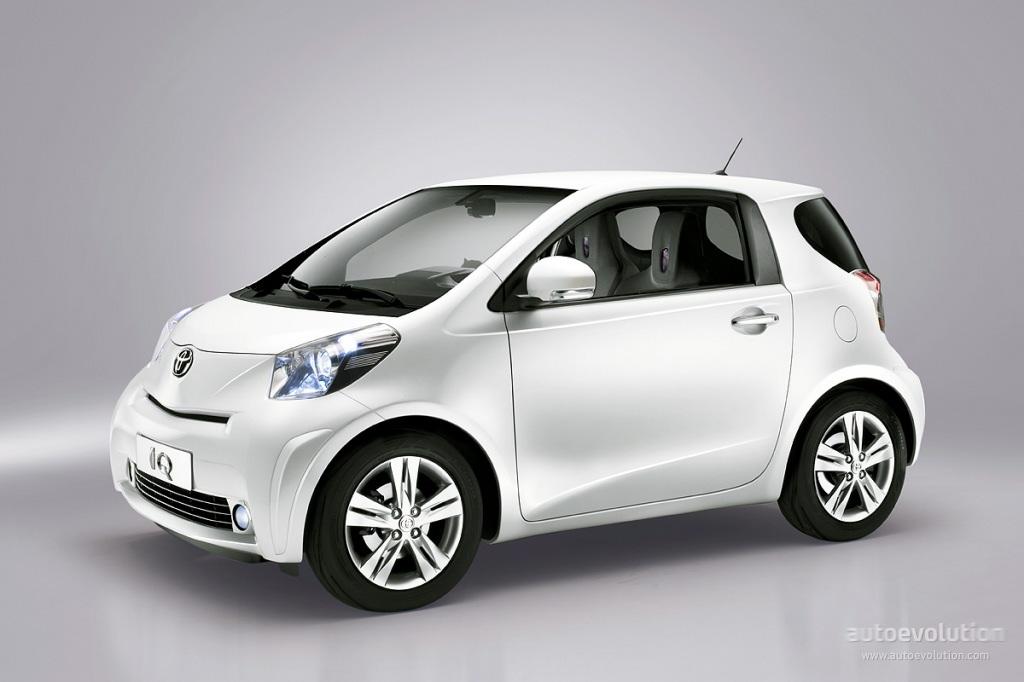
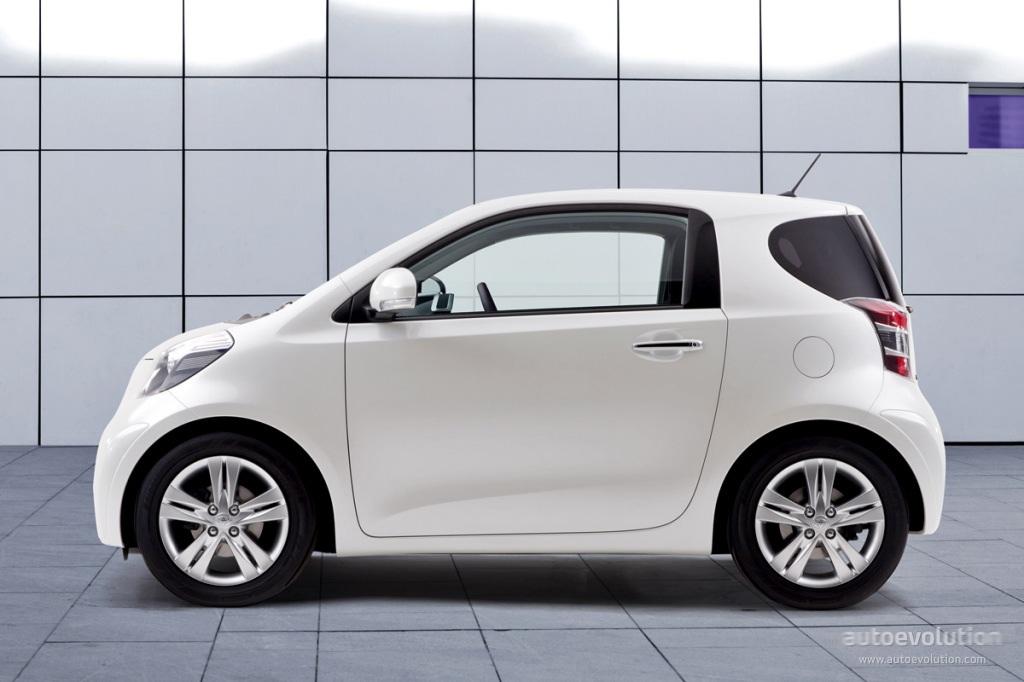
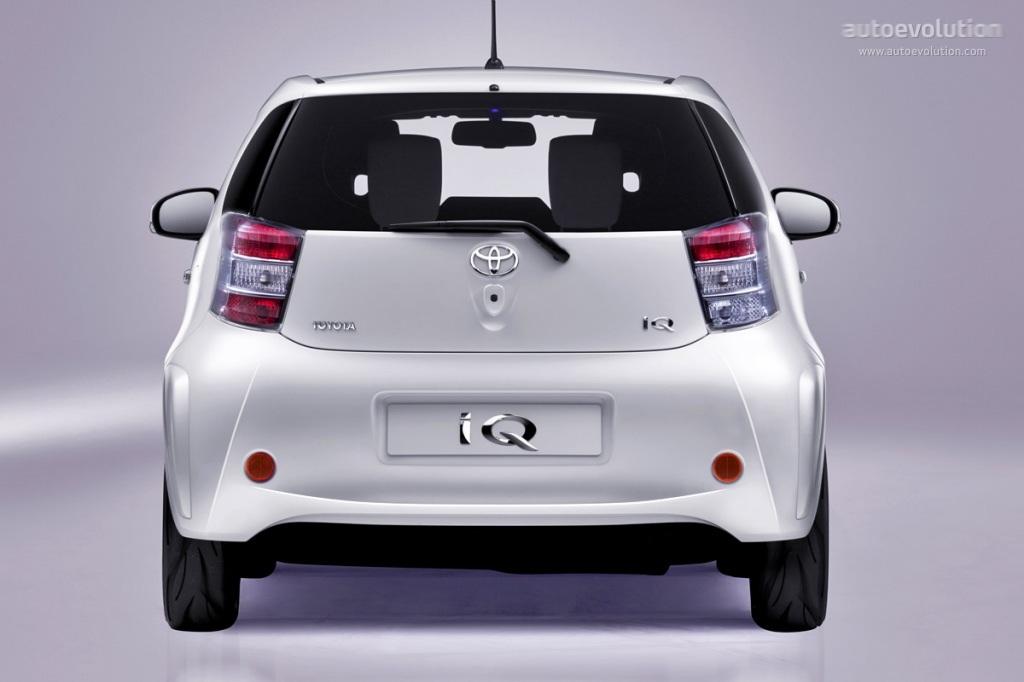
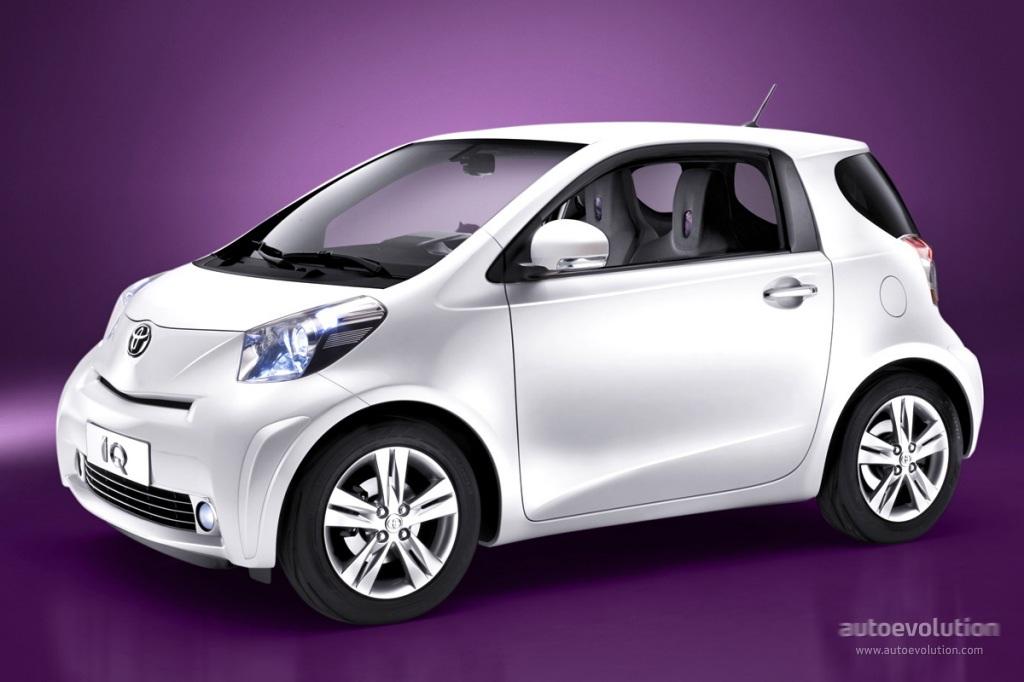
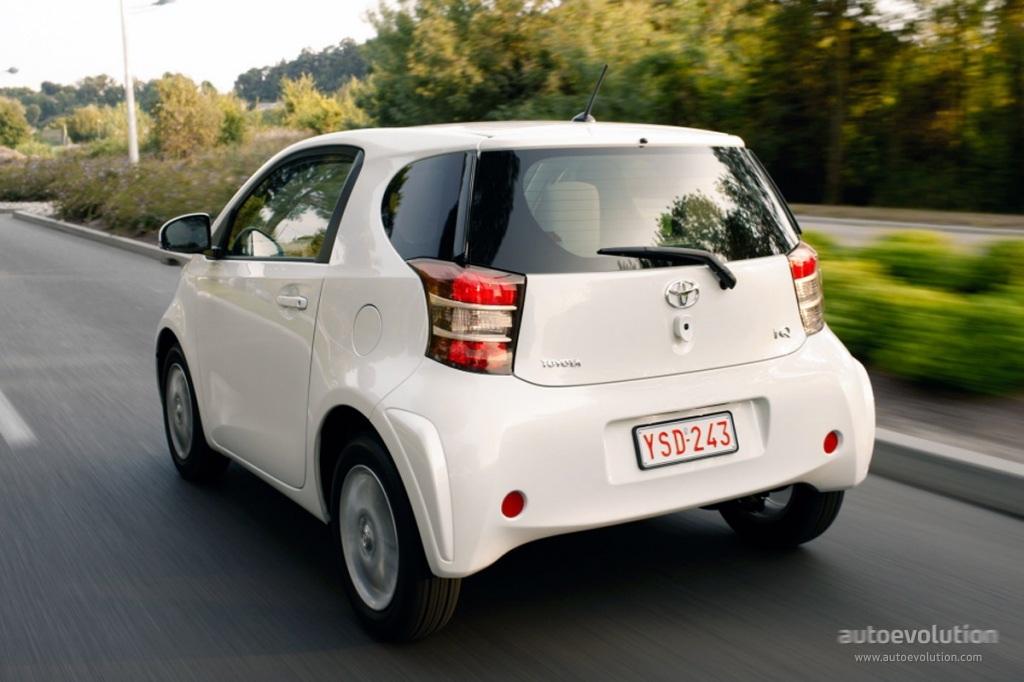
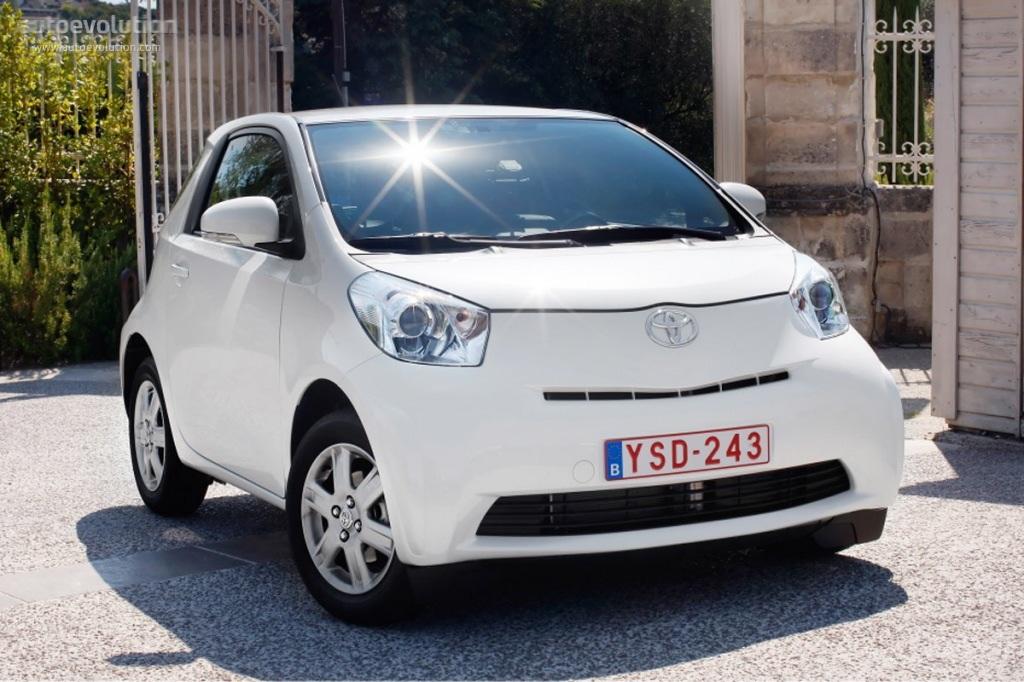
When Hiroki Nakajima penned the car, he focused mostly on the cabin. Toyota wanted to create a car shorter than 3 meters (9.9 feet) and still provide enough room for two rows of seats. Yet, due to the large cabin needed, the front end was very short. The car's headlights were designed in the new-edge styling, with curved lines and sharp corners flanking a panel. Toyota placed only a narrow air intake in the front fascia's mid-section and a slightly broader grille in the lower bumper. At the back, the iQ was abruptly ended by a vertical tailgate.
Inside, the front seats were cramped and high-mounted to provide better legroom for the rear passengers. Tucked behind the right side of the dashboard, Toyota squeezed the AC unit. But the automaker also added unusual features for those cars, such as an infotainment system fitted with a color screen atop the center stack. In the back, there was hardly room for more than a person. In some markets, it was sold as a three-seater. Nevertheless, the trunk was good enough for a newspaper and a pencil.
Under the hood, the iQ started its career with an inline-three, one-liter engine. But, despite its innovations, the sales didn't meet expectations. The car was sold in less than 50,000 units in its best year.
Press Release
The final production version of the revolutionary Toyota iQ made its debut at the 2008 Paris motor show. Last seen as a near-final design at the Geneva show earlier this year, iQ is a city car that is so innovative that - like the Toyota Prius - it stands as a major milestone for future vehicle development.
The radical thinking behind Toyota iQ turns conventional car design on its head. Toyota engineers went to extraordinary lengths to redesign, re-engineer or relocate components to achieve their goal of a car that is less than three metres long, yet has four seats inside with no compromise on space, comfort or driving fun.
Toyota iQ redefines what a car should be in today's era of congested cities and increased environmental awareness, not least by achieving carbon dioxide emissions levels that start at 99g/km. At the same time it is fun to drive with outstanding dynamics and advanced powertrain technology.
Hiroki Nakajima, Toyota iQ chief Engineer, explains: "For the development of iQ my research for a design concept befitting a stylish and small, sophisticated car began by envisioning the customer. My theory was that the group of people most suited to this car's style, small size and premium edge would be described as 'post-modern' - people who demonstrate independence in their choice of lifestyle and values."
Toyota iQ can be ordered from now, with delivery taking place in January 2009. Full-year sales volume for Europe is expected to be around 80,000 units.
DESIGN
Five years ago Toyota launched a programme to radically improve vehicle packaging, focusing on breakthrough solutions for miniaturising key vehicle features. The outcome of this project formed the basis for the development of Toyota iQ.
The objective was a new kind of city car, one that would accommodate four people within an overall length of less than three metres. The result was a landmark solution that will have a long term influence on Toyota's future vehicle development. Toyota iQ is the ultimate expression of refined, yet environmentally efficient urban mobility.
The extraordinary interior space in a car that measures just 2,985mm long, 1,500mm high and 1,680mm wide is a tribute to the determination and ingenuity of Toyota's design and engineering team.
The fact it can carry four people (three adults plus a child) in comfort and safety at motorway speeds, is just the beginning of the story. Starting with a clean sheet of paper, Toyota has created an ingenious and distinctive new city car. And with its proportionally large, 2,000mm wheelbase, Toyota iQ has a compact yet muscular stance that is like no other car.
Toyota iQ's design represents the essence of Toyota's J-factor heritage, which embraces the finest elements of Japanese aesthetics, such as miniaturisation and modernism. Most importantly it brings contradictory elements into harmony, such as "small yet spacious" or "hi-tech yet human".
J-factor is the foundation of Toyota's Vibrant Clarity design philosophy, through which long-standing paradoxes are resolved, such as how to create vehicles that are energised and dynamic, but at the same time rational and ingenious.
One of the three key elements of Vibrant Clarity is Freeform Geometrics, which can be seen in Toyota iQ's techno-organic design, for example, in the "manta ray" styling of the centre console.
On the outside another element comes into play - "Perfect Imbalance of Proportions". Large wheels are placed at the extreme corners of the vehicle to give a robust stance that belies the car's compact size.
True to J-factor aesthetic minimalism, Toyota iQ will be available from launch in three exterior colours: White Pearl Metallic, Black Metallic and Amethyst Metallic (more colours will be available later).
SIX INNOVATIONS PRODUCE A BREAKTHROUGH IN VEHICLE PACKAGING
Toyota iQ's remarkable interior volume is down to its comparatively long 2,000mm wheelbase and short overhangs - 530mm at the front and 455mm at the rear. Interior length from the rear end of the instrument panel to the hip point of the rear seats is an impressive 1,238mm. To achieve this breakthrough, six space-saving engineering innovations were developed.
Integrating the front-mounted differential in a conventional transmission layout allowed Toyota iQ to be built with an ultra-short front overhang. This reduced overall length while at the same time increasing the length of the passenger compartment. Ingeniously this not only reduces the amount of space required for the engine compartment, it also allows the large diameter front wheels to be positioned at the far corners of the vehicle. This shortens the overhangs, which in turn improves stability and manoeuvrability.
Employing centre take-off steering gear and placing it higher in the engine bay means the transmission, engine and differential could be repositioned. The engine compartment could then be made considerably smaller, further reducing the front overhang.
Traditionally fuel tanks are located underneath a car's rear seats. By making the tank flat, reducing it to just 120mm in height and solving the problems of rapidly changing fuel surface levels that such a design would normally create, the tank could be relocated under the floor. Toyota iQ's fuel tank has a 32-litre capacity, giving an ample driving range. Angling the rear shock absorbers backwards allows interior rear space to be increased.
The slimness of the seatbacks frees up an extra 40mm of rear passenger room at knee height. The seats weigh up to 30 per cent less than conventional ones, contributing to overall fuel efficiency and low emissions. Using extruded pipe materials rather than high tensile sheet steel ensures the structure is rigid. The slimmer designs, with integrated headrests, save space without sacrificing comfort or safety.
Reducing the size of the heater and air conditioning unit by 20 per cent compared to the Toyota Yaris allowed the engineers to make significant space savings without compromising performance. This means the blower unit, usually found in front of the front passenger, could be integrated with the main ventilation unit in a central position. This innovation allowed the front passenger area to be moved forward, freeing up cabin space and increasing leg room.
The innovative asymmetric dashboard was designed to open up the whole cabin area. It ensures ample leg room for the front passenger, even when the seat is in its furthest forward position. The sliding seat configuration allows an adult 190cm tall to sit comfortably in the rear seat behind a front passenger of the same height. Shoulder-to-shoulder distance between driver and front passenger is 50mm wider than in Yaris and bears comparison with a C-segment vehicle. The all-round space and seating layout means there is ample room for three adults plus either a child passenger or luggage behind the driver.
ENGINEERED FOR ENVIRONMENTAL EXCELLENCE
Toyota iQ represents the successful outcome of Toyota's well-established drive to reduce the environmental impact of its vehicles without compromising performance and driving dynamics. With CO2 emissions as low as 99g/km (with manual transmission), it is clearly a city car that's in the right place at the right time.
Its innovative, aerodynamic packaging has been achieved through a low overall height, low centre of gravity and wheels pushed out to the four corners of the car. This gives agility at low speed and unprecedented stability for a small car on motorways and winding roads. A minimum turning radius of 3.9 metres further enhances its nimble handling, even in tight city streets.
Toyota iQ is built on a new platform with MacPherson strut front suspension and a newly developed compact rear torsion beam. Together these provide dynamic handling with high degree of ride comfort. The suspension is fine tuned to let the car hug corners at speed, without losing stability.
Toyota iQ engines and transmissions have been developed under the Toyota Optimal Drive philosophy of delivering extremely low fuel consumption and emissions without compromising on power or driving pleasure.
At launch one engine will be available: a 1.0-litre VVT-i petrol unit with a choice of five-speed manual or a new Multidrive CVT system.
1.0-litre VVT-i engine
The 1.0-litre VVT-i petrol engine, winner of the 2008 Engine of the Year award in the sub-1.0-litre class, is a lightweight, three-cylinder unit, producing 67bhp (68 Din hp) at 6,000rpm and 91Nm of torque at 4,800rpm. Combined with a high-ratio five-speed manual transmission, it returns 65.7mpg in combined cycle driving and 99g/km of carbon dioxide (figures provisional prior to final homologation). This keeps Toyota iQ under the UK's 100g/km threshold for Vehicle Excise Duty, a benchmark that is also used for tax purposes in other major European markets, too. Specified with Multidrive transmission, the engine emits 110g/km of CO2 (provisional figure).
Multidrive transmission
Multidrive uses Toyota's latest continuously variable transmission (CVT) technology to give a very smooth shift feel while optimising the balance between performance and fuel economy. It continuously monitors and selects the most appropriate gear ratio and shifting speed, automatically eliminating "shift shock" or jumps while changing gear. It maximises engine torque without unnecessary acceleration and smoothes gear ratio changes, for example limiting uphill shifts and making downhill shifts to achieve optimum engine brake force. The system provides all the city-friendly characteristics of a conventional automatic gearbox.
Models equipped with Multidrive feature an ECO driving indicator lamp on the multi-information display. This encourages more economical driving by signalling when fuel is being saved and, consequently, emissions are reduced. Current and average fuel consumption are also permanently on display.
Gear shift indicator
Models with manual transmission are equipped with a gear shift indicator which shows the driver when to change up or down a gear to achieve the best environmental performance. The system takes driving conditions, accelerator pedal pressure and vehicle speed into account and can return fuel consumption savings of between 0.5 and three per cent compared to normal gear shifting, depending on individual driver habits.
Future developments
A new 1.33-litre Dual VVT-i petrol engine with Stop & Start technology will be available in Toyota iQ later in 2009. A 1.4 D-4D diesel will be offered from launch in some European markets, but is not scheduled for introduction in the UK.
Many of Toyota iQ's innovations will be adapted and evolved for future Toyota models. The car is a major milestone in Toyota's environmental commitment and efforts to develop technologies for much lower emissions. It is an essential part of Toyota's challenge to achieve the Japanese Automobile Manufacturers Association's (JAMA) voluntary commitment of 140g/km average fleet emissions by 2009.
OUTSTANDING ACTIVE AND PASSIVE SAFETY
Toyota iQ benefits from sophisticated active and passive safety technology to protect driver, passengers and pedestrians, with a range of breakthrough features rarely seen in small vehicles.
ABS integrated with Brake Assist (BA) and Electronic Brakeforce Distribution (EBD) is standard on all models. Steering assist Vehicle Stability Control (VSC+) combined with Traction Control (TRC) is also provided across the range and incorporates Electric Power Steering Control to minimise the risk of under- or oversteer.
The new braking system has 255mm front discs and 180mm drums. For collision safety and "braking feel", a link-type brake pedal is fitted.
The high strength body has a multi-load path structure to efficiently absorb and disperse impact forces. Designed by Toyota, it increases occupant protection in a frontal collision through six strategic elements to absorb and redistribute impact energy, including the suspension side rail and cross members, dashboard cross member, and front tyres located as far forward as possible.
The shape and height of the bonnet and a collapsible cowl construction are designed to deform in an impact to mitigate potential pedestrian injury.
All models are fitted with nine airbags. The passenger front airbag has a twin-chamber design with a lower pressure inflator to bridge the space between the passenger and the dashboard.
The driver has a knee airbag, which, because of the short steering column, can be positioned closer to the driver's knees, reducing deployment time and the amount of inflation required. On the front passenger side there is an innovative seat cushion airbag that works with the seatbelts to reduce and disperse force to the head, chest and upper body. This airbag is more effective in restraining hip movement than conventional knee airbags, given Toyota iQ's asymmetrical dashboard design.
Protection from side impacts is provided by two front side airbags, designed to restrain the chest and pelvis at the same time. Two side curtain shield airbags protect all four occupants from side impact to the head and neck.
Emergency Locking Retractor (ELR) seatbelts are fitted to all seats, with additional pretensioners and force-limiters for the driver and front passenger.
World-first rear window airbag
Toyota iQ marks a world-first breakthrough with a rear window curtain shield airbag. This deploys from the roof lining behind the rear headrests to protect occupants in a rear-end collision.
Isofix child seat anchors are fitted to the rear seats. A high tensile strength steel seat frame construction with integrated headrests provide driver and front passenger with collision safety and whiplash protection performance equal to Toyota's latest active headrest systems.
With its 360-degree safety approach, Toyota aims to fulfil Euro NCAP's five-star rating for occupant protection.
ASPIRATIONAL EQUIPMENT SPECIFICATION
In line with its innovative design and high quality finish, it will offer as standard a number of premium features for added style, comfort and convenience, setting it apart from more conventional and modestly specified models in the city car segment.
Two grades will be available - a standard trim and a premium upgrade version. Key features will include (according to grade) alloy wheels, electrically adjustable heated door mirrors with integrated turn indicators, automatic air conditioning, privacy glass, Smart Entry and Start system, dusk-sensing headlights, rain-sensing wipers and an auto-dimming rear view mirror.
To add even more lustre to their Toyota iQ, owners will be offered a full range of dedicated accessories.
################################################################
Toyota iQ range is extended for the first time since launch with the introduction to the line-up of a 1.33-litre engine. The highly efficient lightweight unit, already successfully deployed in Auris, Yaris and Urban Cruiser is offered exclusively in the new Toyota iQ3 model.
Benefiting from Toyota Optimal Drive technology for a class-leading combination of power, fuel economy and low emissions, it uses Dual VVT-i control of both intake and exhaust valves to deliver strong torque at low to medium engine speeds and achieve maximum efficiency.
The headline figures broadcast the exceptional customer benefits in terms of running costs. With manual transmission, Toyota iQ3 returns an official 58.9mpg in combined cycle driving, and 113g/km of CO2 - Band B for road tax (£35 annual charge) - both of which are best-in-class figures. Equipped with Toyota's new Multidrive CVT system, fuel economy is just as good, while emissions rise slightly to 120g/km, but remain within Band B.
This achievement is not at the expense of performance. The engine develops a maximum 98bhp at 6,000rpm and peak torque of 125Nm at 4,400rpm. Nought to 62mph can be achieved in 11.8 seconds (11.6 with Multidrive) and top speed is 106mph. This underlines the fact that Toyota iQ is more than just a city runabout, giving a strong, stable and enjoyable drive at motorway speeds.
Matched to a compact, lightweight six-speed manual gearbox, the engine features Toyota's Stop & Start system. This automatically cuts the engine when the car comes to a stop and the gear shift is moved to neutral; when a gear is selected, the engine restarts quickly (in just 0.4 seconds) and seamlessly, thanks to the use of a permanently engaged gear mechanism. In urban driving - Toyota iQ's natural environment - Stop & Start can yield fuel consumption savings of up to 15 per cent.
Toyota iQ3 is also available with Multidrive, Toyota's new stepless CVT (continuously variable transmission).
One of the key elements of the 1.33-litre engine is its piston design. Smaller and lighter than on the previous 1.3 unit, they are designed with a smaller contact area and use carbon ceramide, an advanced material more commonly used in Formula One engineering, to reduce friction.
Toyota iQ3 carries forward the premium specification of iQ2 but with some additional, exclusive features: the door mirrors have chrome-finished housings and the car rides on larger, 16-inch dual five-spoke alloy wheels. The choice of six paint finishes includes Decuma Grey metallic, which is also exclusive to Toyota iQ3.
The standard equipment features include automatic headlights and wipers, climate control, electric folding and heated door mirrors, Smart Entry and Start, auto-dimming rear view mirror, six-speaker sound system, front fog lights and a leather trimmed steering wheel. Nine airbags are fitted, including the world's first rear window airbag, and the active safety package includes Vehicle Stability Control (VSC) with Traction Control (TRC).
Toyota iQ3 is on sale now. On-the-road prices are £11,495 for the six-speed manual version and £12,495 with Multidrive.
Toyota iQ Accessory Packs and Options
Four themed accessory packs have been assembled for iQ, giving owners an easy way to give their car that something extra.
- iStyle (£295) adds chrome surrounds to the front fog lights, chrome side sills, a chrome strip on the tailgate and aluminium scuff plates.
- iUrban (£345) provides rear parking sensors, a reversible rubber/velour boot liner (for use when the rear seats are folded flat) and carpet mats.
- iSports (£495) focuses on style with a neat roof spoiler, deep rear skirt and inverted delta-shape chrome exhaust tailpipe finisher.
- iConnect (£375) keeps you in touch on the move with Bluetooth, plus the neat detachable Glovebag to store documents and small personal items.
With such a high standard specification on Toyota iQ3, there are just two extra-cost options: leather seat upholstery (£690) and a fully integrated satellite navigation system with Bluetooth and iPod integration (£930).